
Service 01 / Media Strategy
Plan the signal
before you send it.
Media strategy decides where a campaign should appear, for whom, in what sequence and with what budget split. It is the plan that every other advertising decision leans on.
Service overview
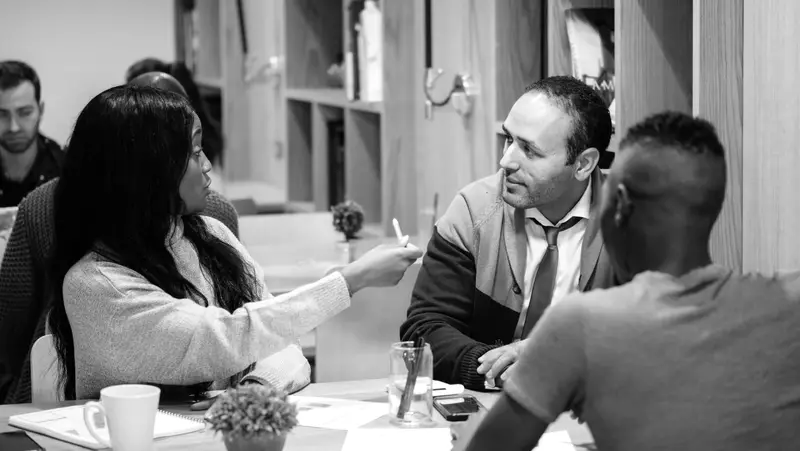
A media strategy translates a business objective into a set of advertising decisions: which audiences matter most, which channels can reach them in a useful state of mind, how budget should be distributed, what each placement is expected to do and how progress will be judged.
Without that layer, campaigns tend to drift towards whatever channel is most familiar or easiest to buy. With it, each placement has a reason to exist, and teams can make trade-offs deliberately instead of by default.
Clicknaro treats strategy as a working document rather than a presentation. It should be specific enough to brief creative, set up campaigns and decide what to measure, and flexible enough to change when the campaign teaches you something.
When this service may be useful
- Launching something newA product, service, location or offer that needs a considered plan before money is committed.
- Spreading across too many channelsBudget is thinly distributed and it is unclear which activity is doing what.
- Changing objectivesThe business is moving from awareness to demand, or from one audience to another, and the media mix has not caught up.
- Preparing a budget requestYou need a reasoned plan to explain how advertising investment could be allocated and reviewed.
- Inheriting existing activityCampaigns are running, but nobody can easily explain the logic behind them.
- Coordinating several partnersCreative, media and analytics are handled by different teams who need one shared plan.
What the engagement may include
Every engagement is scoped to the situation. Depending on your needs, the work may include some or all of the following:
- Review of objectives, existing activity and any available performance information
- Audience definition, including what they need to know and where they spend attention
- Channel roles: what each channel is expected to contribute and why
- Budget allocation options with the trade-offs explained
- Flighting and sequencing across the campaign period
- Creative requirements by channel and format
- Measurement plan: what will be tracked, how and how often
- A written media plan that can be shared with internal stakeholders
How Clicknaro approaches it
We start by agreeing what success should look like in plain language. "More awareness" or "more leads" is a starting point, not a plan; we work towards a description of who should do what, and how you would know.
From there, we map the audience journey — not as a theoretical funnel, but as a realistic picture of how people in your category discover, compare and choose. That picture decides which channels earn a place and what each one is asked to do.
Budgets are then distributed with explicit assumptions. Where the evidence is thin, we say so, and we build in checkpoints to review the split once real campaign information is available.
Planning considerations
Budget relative to ambition
A modest budget spread across many channels often achieves less than a focused plan. Concentration is usually a strategic choice, not a compromise.
Lead times
Creative production, platform approvals and tracking setup all take time. A realistic schedule protects the launch date.
Seasonality and competition
Costs and audience behaviour shift through the year. Plans should account for when competition for attention is highest.
Measurement limits
Not every effect of advertising can be tracked directly. Agreeing in advance what will and will not be measurable avoids false conclusions later.
Approvals and compliance
Regulated categories and platform advertising policies can restrict what is possible. These constraints belong in the plan from day one.
Frequently asked questions
Do we need a media strategy if we only advertise on one channel?
Often, yes — though it can be lighter. Even a single-channel campaign benefits from a clear objective, audience definition, budget logic and a plan for measurement. The strategy may also confirm whether one channel is genuinely the right choice.
How long does a media strategy take to prepare?
It depends on the complexity of the business and the amount of existing information. A focused plan for a single campaign can be prepared relatively quickly; a broader annual plan involving several stakeholders takes longer. We agree the scope and timeline before starting.
Will you buy the media as well as plan it?
Clicknaro can plan and manage campaigns across the channels described on this site. Where it makes more sense for your internal team or another partner to run specific activity, the strategy can be written so others can execute it.
Can you guarantee results from the plan?
No. Nobody can honestly guarantee advertising outcomes. What a good strategy provides is a reasoned plan, clear assumptions and a way to learn quickly from what actually happens.
09 / Next step
Talk to us about
Media Strategy.
Tell us what you are working on and where you need support. We will reply by email to discuss whether and how we can help.
Let's talk